

Arizona charges most drug cases under its felony drug statutes. How your charge is classified often decides whether or not you end up with a felony conviction.
We are R&R Law Group, a criminal defense team in the Scottsdale and Maricopa County courts. Being told you are facing a felony is frightening. Our core values of Safety, Clarity, and Hope provide a safe place to talk, a clear picture of your charges, and a secure plan for your future. Call us at (602) 497-3088 or reach out to us for free case evaluations.
How R&R Law Group Defends Scottsdale Drug Charges

Every drug defense starts with the same three questions. Which statute actually governs the charge? Does the amount in your possession change the severity of the charge? Is probation available, and will a prior conviction affect your eligibility?
We work every drug case as a team of criminal defense attorneys, not one lawyer handling your case alone. We have the resources to win your case, with each attorney bringing distinct experience. Whether you are concerned about a possession or paraphernalia charge or about your eligibility for probation, we can answer your questions and help you.
We bring modern legal defense strategies to drug cases as part of our broader felony defense practice.
What Counts as a Drug Charge in Arizona
Arizona does not have one drug possession law. It has four. Which one your charge falls under sets your felony class before anyone argues the facts of your case.
That question comes first for anyone facing a Scottsdale drug possession charge. Each type of drug charge falls under its own section of the Arizona Revised Statutes (A.R.S.), and that section sets how a simple possession charge (possession for personal use, not for sale) is classified:
| Category | Statute | What it covers | Class for simple possession |
|---|---|---|---|
| Dangerous drugs | A.R.S. § 13-3407 | Methamphetamine, LSD and similar | Class 4 felony |
| Narcotic drugs | A.R.S. § 13-3408 | Heroin, cocaine and similar | Class 4 felony |
| Marijuana outside the adult-use exceptions | A.R.S. § 13-3405 | Marijuana, except as provided in §§ 36-2852 and 36-2853 | Class 6 felony under two pounds, not for sale |
| Drug paraphernalia | A.R.S. § 13-3415 | Equipment and materials used with a drug | Class 6 felony |
Three points the categories do not show:
- The class listed is where a case starts, not where it ends.
- Statute, not street name, sets the category.
- Possession for sale is charged under a different paragraph of the same statute. Simple possession of a dangerous drug is a class 4 felony, but possession for sale jumps to a class 2 felony.
Is First-Offense Drug Possession a Felony in Arizona?
Yes. Simple possession or use of a dangerous drug or a narcotic drug is charged as a class 4 felony in Arizona. For a dangerous drug charge, a first offense does not have to end as a felony conviction.
Section 13-3407(B)(1) opens that path for dangerous drug charges specifically.
Three conditions decide whether that exit is open:
- The State has to make the motion. The court then weighs the nature and circumstances of the offense.
- The drug cannot be lysergic acid diethylamide (LSD), methamphetamine, amphetamine, or phencyclidine (PCP).
- The person cannot have a prior felony conviction or a prior violation of § 13-3407 or § 13-3408.
When those conditions are met, the court can close the case two ways. It can enter a class 1 misdemeanor judgment. Or it can order probation and leave the offense undesignated until you finish probation.
Undesignated means the felony question stays open, and how probation goes answers it.
Probation Is Possible, But Not Guaranteed, for a Drug Conviction

Arizona law makes probation possible, but it does not guarantee it. If you are convicted of possessing or using a controlled substance for personal use, you are eligible for probation. The same is true for a drug paraphernalia conviction.
Four separate findings can take that eligibility away. The rule comes from A.R.S. § 13-901.01.
A court sentences under the felony chapter instead if it finds any of these:
- Three convictions: A third conviction for personal possession of a controlled substance or drug paraphernalia.
- Refused treatment: You refused drug treatment as a term of probation.
- Rejected probation: You turned down probation.
- Methamphetamine: The offense involved methamphetamine.
A separate subsection also rules out probation for anyone convicted of, or indicted for, a violent crime.
Probation and a clean record are two different outcomes under two different laws. You can qualify for probation and still end up a convicted felon.
The misdemeanor judgment and the undesignated offense come from the same reduction pathway covered above. Both have to be negotiated.
These are two different legal questions, and a good defense has to answer both: the one that could keep you out of custody, and the one that decides whether a felony stays on your record.
Diversion Programs Can Resolve a Charge Before Conviction

Probation and the misdemeanor-reduction path both come after a conviction. Maricopa County also offers a separate option that can come before one. Through its Felony Diversion Program, the Maricopa County Attorney’s Office allows eligible individuals with minimal criminal history charged with possession of controlled substances and certain other felony offenses to complete an individualized treatment program instead of facing prosecution.
Successful completion results in the filed charges being dismissed, avoiding a felony conviction entirely. Acceptance is at the county attorney’s sole discretion under A.R.S. § 11-361, so it’s worth raising with an attorney as early as possible.
Can a Paraphernalia Charge Really Be a Felony?

Yes. Using drug paraphernalia, or possessing it with intent to use it, is a class 6 felony in Arizona. That is why a pipe, a scale, or a baggie can carry felony exposure on its own.
That class comes from Arizona’s paraphernalia statute, already cited in the table above. The definition is wide, covering “all equipment, products and materials of any kind” used with a drug, including items merely intended for that use. That is how ordinary objects end up in a charging document.
An Arizona drug paraphernalia charge sits inside the probation rule too. The same statute named paraphernalia next to controlled substances, and the same four findings apply.
Which Court Hears a Scottsdale Drug Case
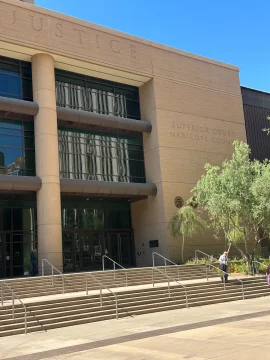
Scottsdale City Court handles cases brought under city ordinances. Arizona law shares jurisdiction between the city court and the local justice courts over state-law charges from inside city limits, so either court can hear a misdemeanor version of the case.
Most charges under Arizona’s four drug statutes are felonies, though. A felony drug case moves to the Maricopa County Superior Court for anything beyond the initial proceedings; the city and justice courts can only start the case and hold you to answer.
The charging decision, not the arrest, picks the starting court. Maricopa County drug charges that read alike on a police report can land in different courtrooms. The court sets the timeline and the prosecutor.
Clearing an Old Marijuana Charge From Your Record
Since July 12, 2021, you can ask a court to erase certain marijuana records. Arizona calls that expungement.
The offense has to have happened before that date. It can be one you were arrested for, charged with, convicted of, or sentenced for. A.R.S. § 36-2862 lists what qualifies:
- Possessing, consuming, or transporting two and one-half ounces or less of marijuana. No more than twelve and one-half grams of it can be concentrate.
- Possessing, transporting, cultivating, or processing no more than six marijuana plants. The plants have to be at a primary residence, for personal use.
- Possessing, using, or transporting paraphernalia for cultivating, processing, or consuming marijuana.
Arizona marijuana expungement runs on a petition. Nothing clears on its own until someone files and a court rules.
Related Defense Topics
A drug charge rarely arrives alone. A stop that produces a possession charge often produces a drug DUI charge too. When an allegation moves from personal use to possession for sale, the paragraph charged and the exposure change substantially.
If you were arrested and want to understand what happens next after a felony arrest, that process starts running before the drug charge itself is resolved.
Common Questions About Scottsdale Drug Charges
Is Marijuana Fully Legal in Arizona Now?
Not fully. Adults 21 and older can legally possess limited amounts under Arizona’s adult-use law. Anything above those limits, or possession by someone under 21, can still be charged under Arizona’s criminal drug statutes.
Can a Prescription Drug Charge Really Be a Felony?
Yes. Arizona’s dangerous drug category includes certain prescription medications, such as some stimulants, when they are possessed without a valid prescription. The charge is treated the same as possession of any other dangerous drug.
Is a Drug Charge a State or a Federal Case?
Most drug charges in Scottsdale and Maricopa County are prosecuted under Arizona state law, not federal law. Federal charges are possible, but they are typically reserved for larger trafficking operations or cases that cross state lines.
Talk With a Scottsdale Drug Crimes Attorney
The time to shape a drug charge is early. Act before the classification hardens and before the State takes a position on your case. If you were arrested or cited in Scottsdale or Maricopa County, keep the paperwork you were handed.
We built our defense practice on integrity, honesty, and compassion, and that shapes how we handle every drug case from the first call. Call R&R Law Group at (602) 497-3088 or contact our team. Free case evaluations are available now.